
It might sound like sci-fi, but for a growing number of Australian households, an electric vehicle (EV) is becoming much more than just a way to get from A to B. With advanced bidirectional charging technology, select EVs can now store excess energy from your solar panels during the day and help power your home after sunset.
What Is Bidirectional EV Charging? (V2L, V2H & V2G)
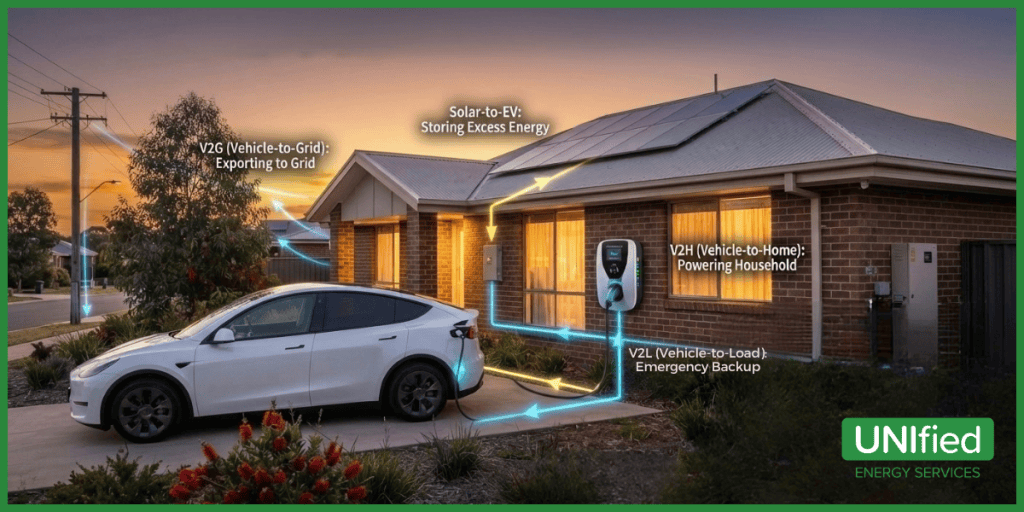
Unlike standard EV chargers that only flow power one way (from the grid into your car), bidirectional chargers allow energy to flow both ways. This energy-sharing capability generally falls into three categories:
- V2L (Vehicle-to-Load): Power household appliances, camping gear, or power tools directly from your EV. Perfect for off-grid trips or emergency backup.
- V2H (Vehicle-to-Home): Use your EV battery to power your entire household, functioning just like a giant home battery storage system.
- V2G (Vehicle-to-Grid): Export stored energy from your EV back into the main electricity grid during periods of peak demand, potentially earning credits on your energy bill.
Why Bidirectional Charging is a Game-Changer for Solar Households
A standard residential home battery typically stores around 10kWh to 15kWh of energy. In contrast, many modern EVs pack a massive 60kWh battery or more-giving you enough stored energy to potentially run an average home for several days.
For homes with solar PV systems, this unlocks a powerful opportunity:
- Charge your EV using free, clean solar energy during peak daylight hours.
- Discharge a portion of that stored power to run your household during expensive evening peak periods, slashing your grid reliance.
What’s the Catch? Current Challenges in Australia
While the technology is fully functional, bidirectional charging is still in its early stages in the Australian market. Keep these factors in mind:
- Vehicle Compatibility: Not all EV makes and models currently support V2H or V2G capabilities.
- Hardware Costs: Specialized bidirectional chargers are still relatively expensive compared to standard EV chargers.
- Installation & Compliance: Setup requires specialized grid interconnection approvals and professional installation.
- Incentives: Current Federal and state battery rebates generally apply to stationary home batteries rather than EV charging hardware.
Is Bidirectional EV Charging Worth It Today?
For most homeowners right now, installing a dedicated home battery remains the simplest, most cost-effective path to energy independence.
However, as EV technology matures and bidirectional hardware becomes more mainstream, your car is set to become one of the largest energy assets in your household.
The takeaway? If you’re already investing in rooftop solar and energy storage, you’re building the ultimate foundation for an energy-smart future where your EV can step up and play an even bigger role.

Why Choose UNIfied?
At UNIfied Energy, we’re committed to making your electrification journey seamless. We help Australian households and businesses:
- Reduce energy bills and operating costs
- Lower carbon emissions and confidently adopt sustainable practices.
Contact UNIfied Energy today or call 1300 817 847 to achieve greater savings in these precarious times and start your journey of clean energy living.